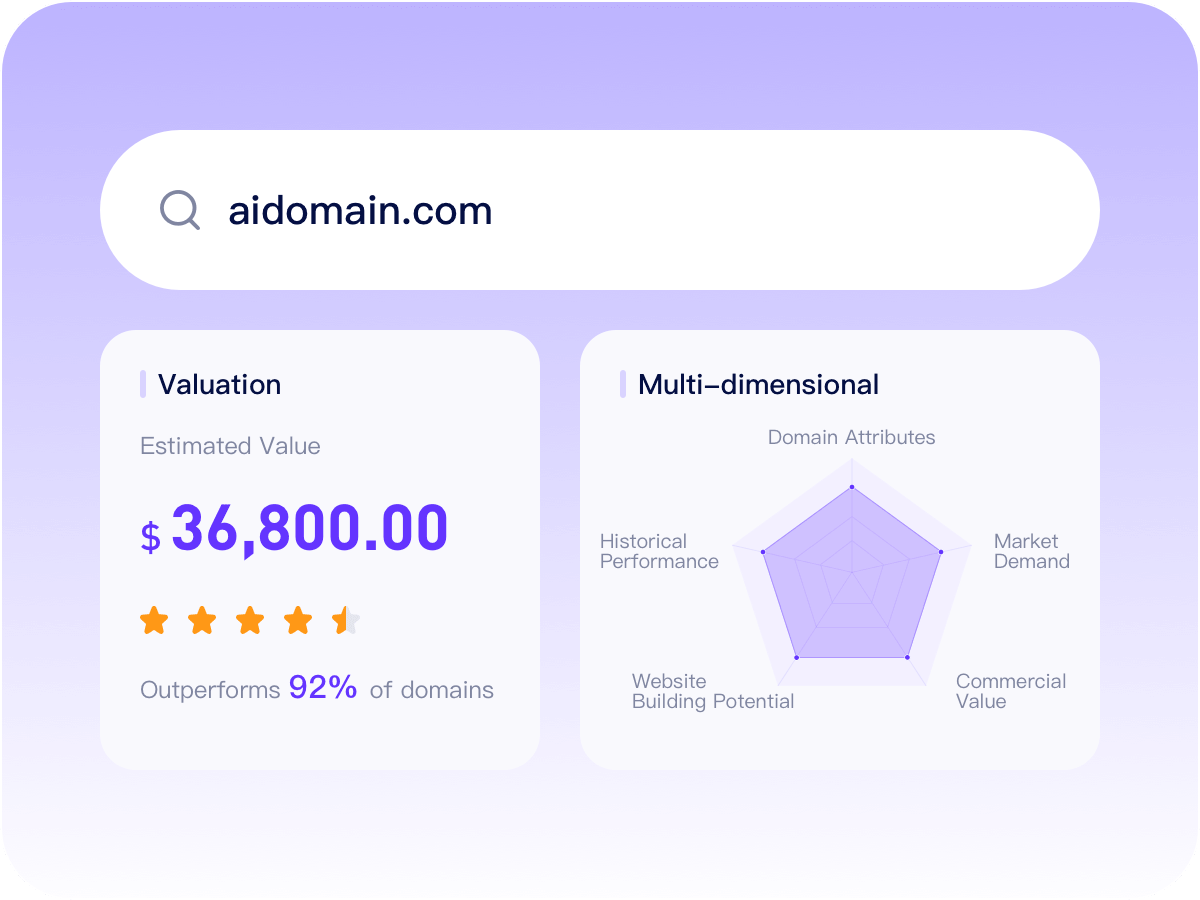

Domain Valuation
Powered by multi-dimensional data and industry algorithms, it evaluates a domain’s market potential and commercial value for investment, trading, and development decisions.
Frequently asked questions
Domain valuation is based on a multi-dimensional data model that takes into account factors such as domain length, keyword popularity, extension type, historical sales data, SEO performance, and industry demand. A reference price is then generated based on the combined analysis of these factors.
Key factors include: 1. Domain length (shorter domains are more scarce and valuable). 2. Whether it contains popular keywords. 3. Domain extension (e.g., .com is typically more valuable). 4. Ease of memorability and spelling. 5. Historical website usage and SEO performance. 6. Industry demand and market trends.
1. Brand value: Whether the domain is short, memorable, easy to spell, and has potential as a brand name. 2. Keyword value: Whether it contains relevant industry keywords or has search traffic potential. 3. Domain extension (TLD): Main extensions like .com generally have higher market recognition and investment value. 4. Commercial use: Whether the domain can be used for a website, product, or brand rather than just a random string. 5. Scarcity & liquidity: Whether it is a short, generic, or industry-related name that can be easily traded in the market. 6. Historical risk: Whether it has a negative history such as spam usage or SEO penalties.
Yes. Even without historical data, the system can still provide a basic valuation based on factors such as keywords, domain structure, and extension type.
Yes. If a domain has expired or been re-registered, it may impact its trust score and SEO value, which can in turn affect the valuation result.
Not necessarily. However, shorter domains are generally rarer and easier to remember, which often makes them more valuable in the market. Ultimately, value still depends on keywords and market demand.